
Milanote is popular with designers, writers, and other creative professionals because it lets them arrange images, notes, links, and tasks freely on a visual board. But its free plan has limits, and its board-based approach isn't right for every project.
This guide compares 11 Milanote alternatives, including visual canvases, moodboard tools, and apps for organizing creative work. Some closely resemble Milanote; others are better for documentation, offline notes, or managing creative projects with a team.
Why look for a Milanote alternative?
Milanote is a good fit for moodboards, research, storyboards, and other creative projects where spatial arrangement matters. An alternative makes more sense when one of the limits around that workflow starts getting in the way.
- You outgrow the free plan. Milanote Free is capped at 100 cards (notes, images, links, and similar content) and 10 file uploads. The board count itself is not restricted: shared boards are unlimited. Moving to Pro removes the content limits, but costs $9.99 per month with annual billing or $12.50 monthly. See Milanote's current plans.
- You need reliable offline access. Milanote's iPhone and Android apps still require an internet connection to view and edit boards. Obsidian, PureRef, and visualOS are better matches when local or offline work is a requirement.
- Your projects need a different structure. Milanote supports nested boards and search, which works well for visual projects. Larger knowledge bases or production systems may be easier to manage with linked documents, folders, tags, database properties, or multiple structured views.
- Your team collaborates in a different way. Milanote supports editors, commenters, and read-only viewers. Miro and FigJam add workshop features such as timers and voting, while Nuclino combines visual planning with shared documentation and version history.
- You mainly need one specialist job. PureRef is built around reference images, Pinterest around discovering inspiration, and Excalidraw around sketching and diagrams. A narrower tool can be a better fit if you use only one part of Milanote.
Best Milanote alternatives compared
The biggest differences are how freely you can arrange content, how much the free plan allows, and how you share or export your work. The table highlights the main reason to choose each tool and what you give up compared with Milanote.
| Tool | Best for | Free option | Main limitation |
|---|---|---|---|
| Nuclino | Visual collaboration with organized docs | Free plan | Canvas is part of a structured workspace |
| Miro | Team brainstorming and whiteboarding | 3 editable boards | Can be more complex for personal creative notes |
| FigJam | Creative workshops and Figma teams | Limited free plan | Less suited to long-term knowledge organization |
| Obsidian | Offline notes with a visual canvas | Free for personal and work use | Collaboration needs additional setup |
| PureRef | Artists' reference images | Pay-what-you-want personal download | Not a team planning or documentation tool |
| Excalidraw | Quick sketches and visual thinking | Free open-source editor | Fewer content-management features |
| Notion | Structured creative projects and databases | Free plan | No comparable freeform moodboard by default |
| Finding and collecting visual inspiration | Free | Limited freeform layout and project planning | |
| visualOS | Local-first personal visual boards | Free browser app | No real-time team collaboration |
| xTiles | Milanote-style visual planning with more structure | Free plan | More structured around tiles, pages, and collections |
| Heptabase | Visual research and connected thinking | 7-day trial | No regular free plan for individual use |
11 best Milanote alternatives
1. Nuclino
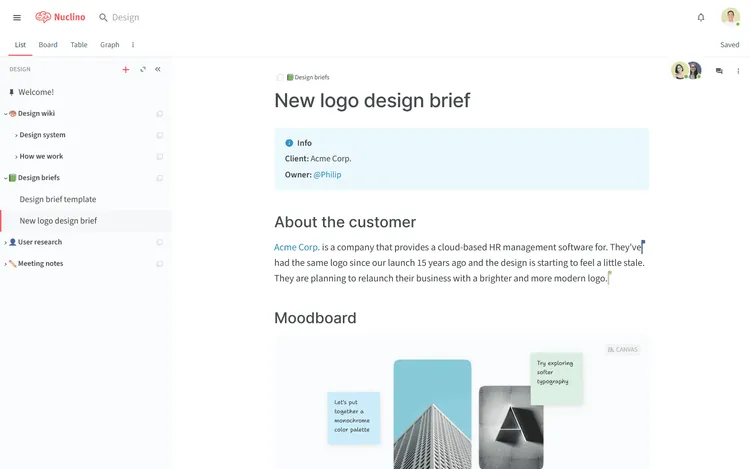
Nuclino combines a visual canvas with linked items, collections, and shared project documentation. It fits teams that like Milanote's visual planning but need more structure around the material they collect.
You can add an infinite collaborative canvas to any item and use it for moodboards, sticky-note brainstorming, diagrams, and flowcharts.
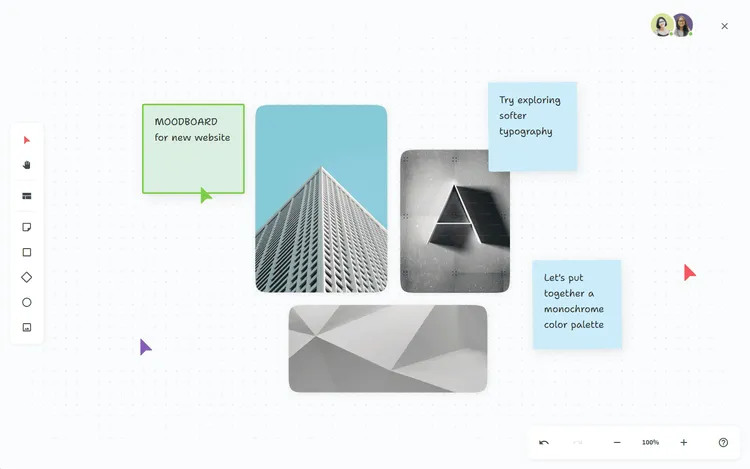
Every item in Nuclino can be edited by multiple collaborators in real time, with earlier versions available in the version history. In addition to a canvas, you can also add notes, images, videos, to-do lists, code blocks, and bring your notes to life with interactive media embeds from supported apps.
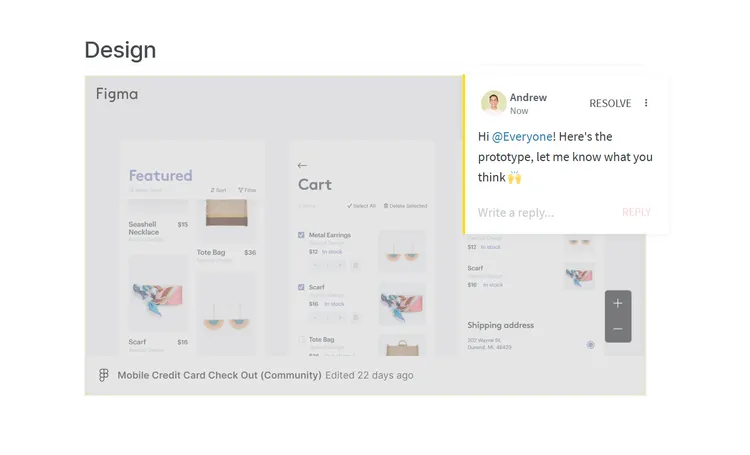
Comments and mentions make it easy to exchange feedback directly in Nuclino.
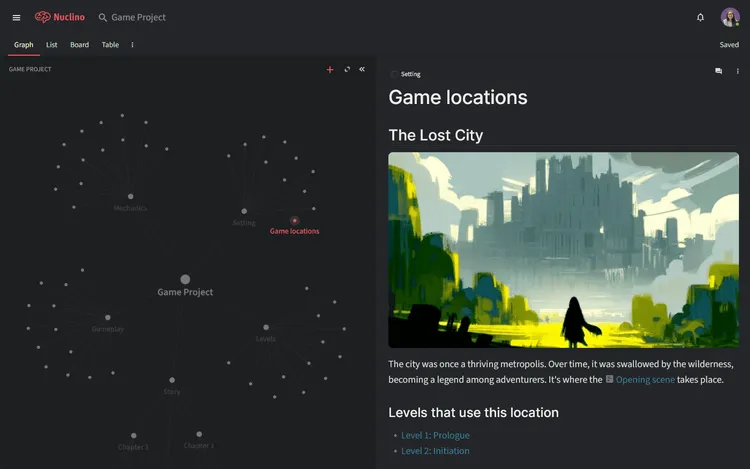
Outside the canvas, Nuclino can organize items in List, Board, Table, and Graph views. That makes it easier to move the same project into a Kanban board, structured table, or connected graph without rebuilding the content in another app.
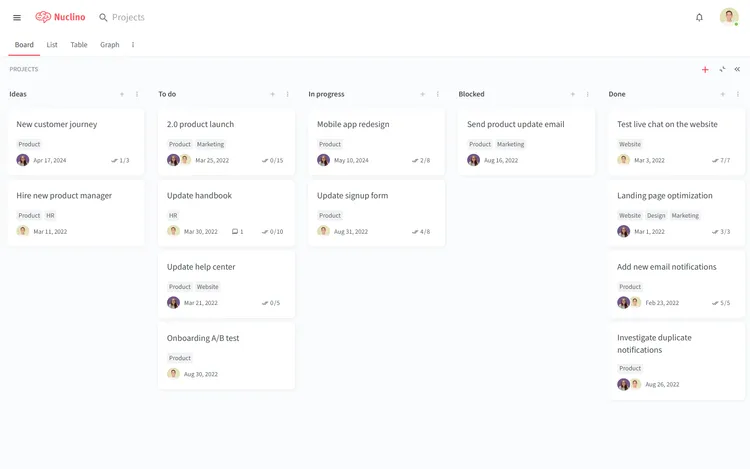
That makes Nuclino more suitable than Milanote when visual planning is only one part of the workflow. The same workspace can hold brainstorming, sprint planning, game design, and an internal wiki.
Nuclino vs Milanote
Nuclino combines an infinite collaborative canvas with linked documents, collections, and multiple views. Milanote is built around visual boards for creative planning. Nuclino is a better match when the same team also needs organized project documentation, while Milanote keeps moodboarding at the center of the workflow.
Pricing
Nuclino has a free plan. Paid plans start at $6 per user per month.
2. Miro
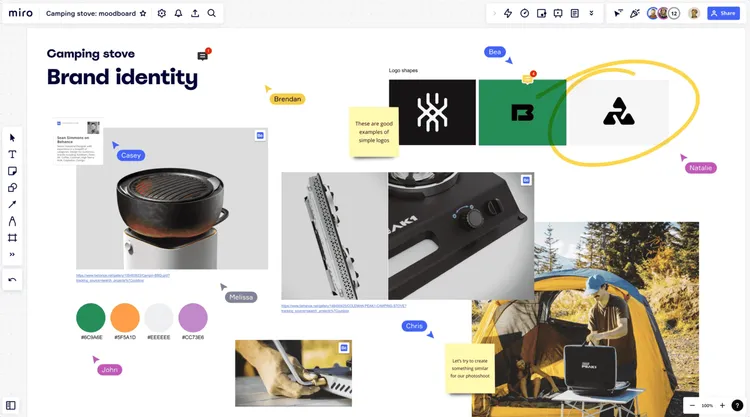
Miro is an online whiteboard for teams planning projects together. You can place sticky notes, images, text, shapes, diagrams, and links on an infinite canvas, then group ideas into frames. Its templates cover brainstorming sessions, storyboards, retrospectives, and creative workshops.
Miro is particularly useful when several people need to develop an idea at the same time. Teams can leave comments, present sections of a board, and run facilitated sessions using features such as timers and voting. Those features go beyond Milanote's approach to collecting references and planning creative work.
Miro vs Milanote: Miro is a better fit for workshops and collaborative brainstorming. Milanote is more focused on keeping visual references, notes, and tasks together across ongoing creative projects. Miro's extensive whiteboard controls can be unnecessary for someone who mainly wants a personal moodboard. Our Milanote vs Miro comparison looks at the differences in more detail.
Pricing: Miro's free plan includes three editable boards, which may be restrictive if you're leaving Milanote because of its limits. Paid plans start at $8 per member per month with annual billing.
3. FigJam
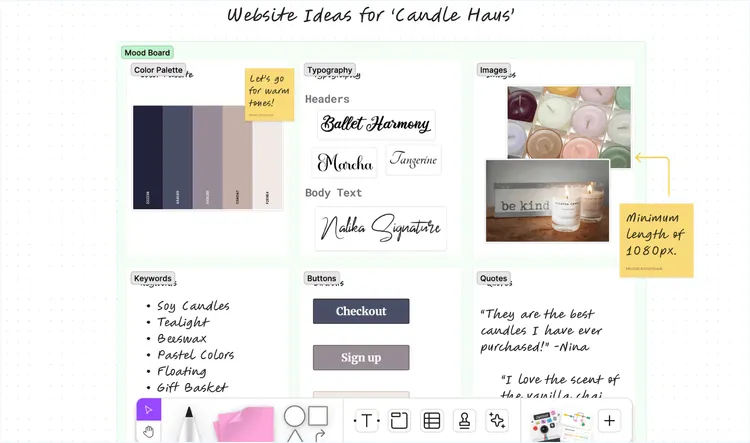
FigJam is Figma's online whiteboard for brainstorming, design reviews, and workshops. It supports freeform sticky notes, images, drawings, connectors, stamps, and diagrams on a shared canvas. Teams can also use templates to plan user journeys, map ideas, or collect feedback.
The integration with Figma is its main advantage for designers. A team can discuss early concepts in FigJam and move into interface design without switching to an unrelated platform. Audio and live chat help when people are working together remotely.
FigJam vs Milanote: FigJam is aimed at collaborative sessions and design-team feedback, while Milanote is better suited to keeping inspiration, written notes, and project materials together over time. FigJam also lacks Milanote's nested-board approach to organizing larger collections of references.
Pricing: Figma's free Starter plan includes three FigJam files. Paid FigJam collaboration seats start at $3 per month on the Professional plan with annual billing. See Figma's pricing for the seat types and limits.
4. Obsidian
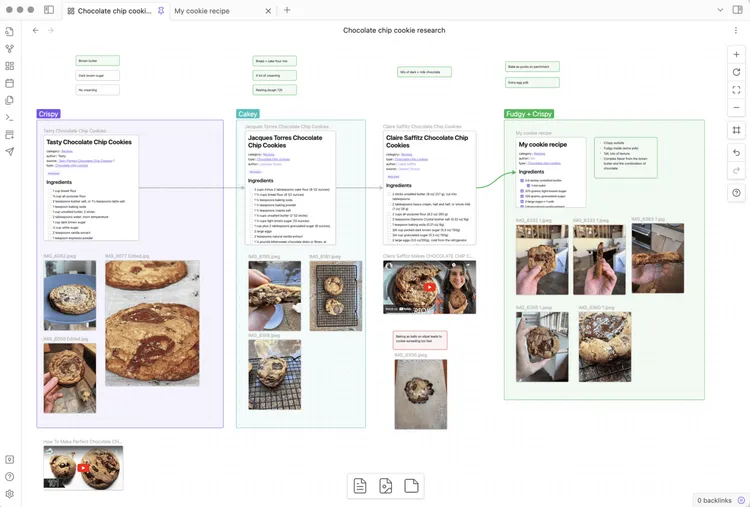
Obsidian is a note-taking app built around local Markdown files. Its Canvas feature lets you place notes, images, links, and other cards on an open visual workspace, with connections between related ideas. Notes can also be linked to one another and explored through a graph view.
This makes Obsidian useful for writers, researchers, and people whose visual boards are part of a larger collection of notes. Your files remain accessible on your device, and you can work without an internet connection. Plugins and themes add customization, although configuring them takes more effort than starting a Milanote board.
Obsidian vs Milanote: Obsidian offers more control over local files and connected notes. Milanote has a more visual-first interface for collecting inspiration and is easier to share with collaborators. Obsidian's standard workflow is primarily individual; real-time team collaboration isn't comparable to Milanote's shared boards.
Pricing: Obsidian is free to use, including for work. Optional Sync and Publish services cost extra.
5. PureRef
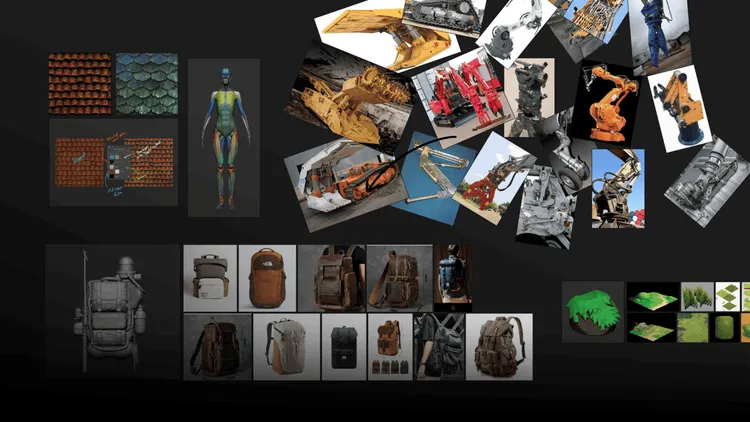
PureRef is a desktop application for arranging reference images on a freeform board. Artists often keep it open alongside illustration, 3D modeling, or photo-editing software so they can refer to images without repeatedly switching windows.
You can drag images into a board, scale and rotate them, arrange them into groups, and zoom across a large collection of references. PureRef is deliberately focused on images rather than trying to become a general project-management workspace. Its desktop workflow is also useful when you want references available offline.
PureRef vs Milanote: PureRef is closer to a dedicated visual reference sheet. It can replace Milanote if you mostly use boards for images, but it doesn't offer Milanote's combination of notes, tasks, links, nested project boards, and online team collaboration.
Pricing: PureRef offers a pay-what-you-want personal download. Business use has separate licensing terms, so check the official website before using it at work.
6. Excalidraw
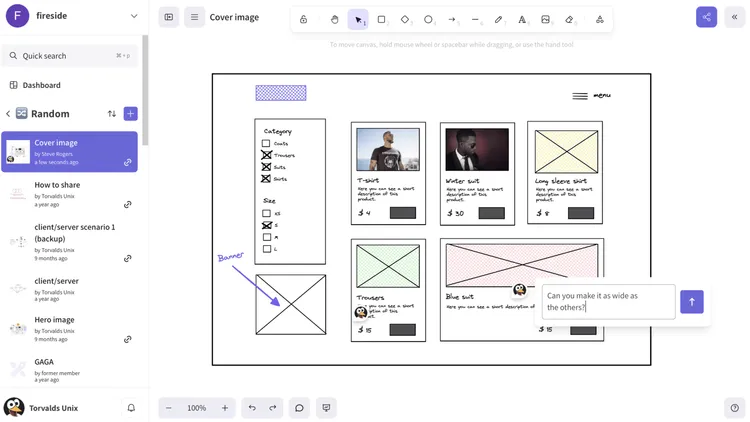
Excalidraw is a free, open-source whiteboard with a hand-drawn style. Its canvas supports shapes, arrows, text, images, and freehand sketches. You can open the editor in your browser without creating an account, which makes it convenient for quick visual thinking.
Excalidraw works well for rough storyboards, flowcharts, and explaining ideas during a discussion. The hosted editor supports collaborative sessions and lets you export drawings or save them in Excalidraw's own editable file format. It is less focused on managing a library of research or building a long-running creative project.
Excalidraw vs Milanote: Excalidraw is useful if you want to sketch and diagram without Milanote's free-plan item limit. Milanote offers more structure for collecting images, links, notes, and tasks in nested boards. Excalidraw isn't a direct replacement for that content-management workflow.
Pricing: The core editor is free and open source. Excalidraw's optional hosted services have separate pricing.
7. Notion
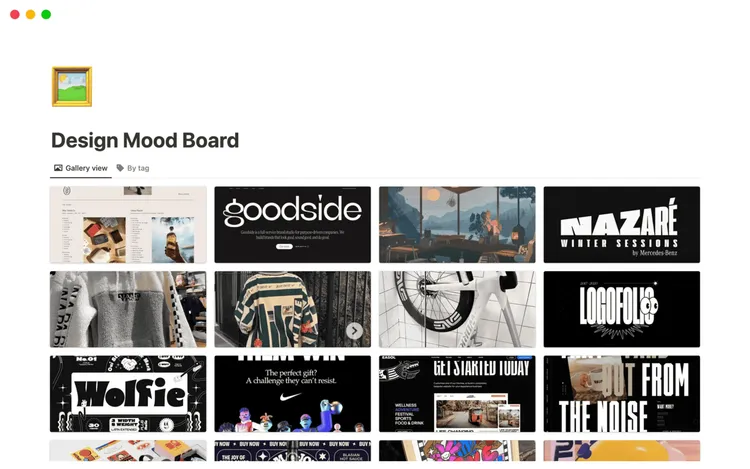
Notion combines documents, databases, wikis, and task management in one workspace. Creative teams can keep briefs, research, production schedules, and reference collections together, then display database entries as galleries, boards, tables, or calendars.
The gallery view is useful for image-heavy collections, while database properties make it easier to filter references by project, status, or category. Notes can link to other pages, and shared workspaces support comments and collaborative editing. This structure can be helpful once a Milanote board has become difficult to browse.
Notion vs Milanote: Notion provides more ways to categorize and retrieve information, but it doesn't give you Milanote's freeform canvas for arranging images and notes at arbitrary positions. Its gallery and board views follow defined layouts. If spatial composition is the main reason you use Milanote, Notion will feel different. See our Milanote vs Notion comparison for a closer side-by-side look.
Pricing: Notion has a free plan with unlimited pages and blocks for individuals, but the free workspace and upload limits change when more members join. File uploads are limited to 5 MB each on Free. Plus starts at $10 per member per month with annual billing.
8. Pinterest
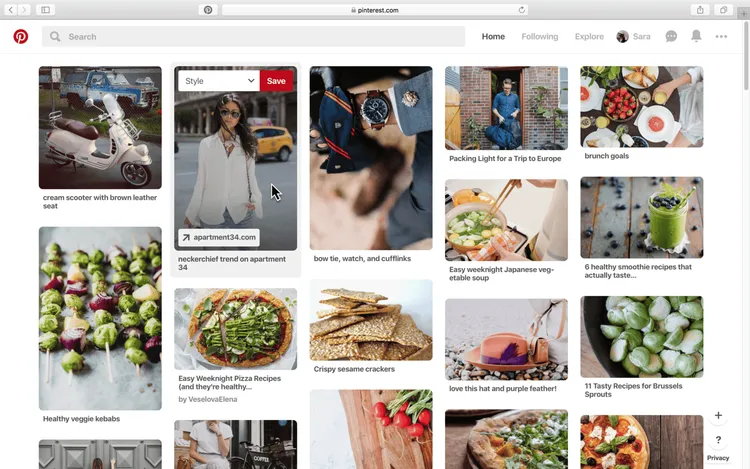
Pinterest is a visual discovery platform rather than a full creative planning workspace. You can search for images and ideas, save Pins to boards, and group them into sections. Recommendations also help you discover references related to what you've already collected.
It works well at the beginning of a creative project, when you're gathering inspiration for an illustration, interior, brand identity, or campaign. Private boards and shared group boards offer some organization and collaboration, but Pinterest isn't built around project documents, task lists, or freeform spatial layouts.
Pinterest vs Milanote: Pinterest is better for discovering and collecting images from the web. Milanote gives you more control over how references appear alongside your own notes and project materials. Pinterest lets you reorder Pins and sections, but you can't freely position every item on a canvas.
Pricing: Pinterest is free to use. It does impose account-level limits, including on the number of boards, so it shouldn't be described as completely unlimited.
9. visualOS
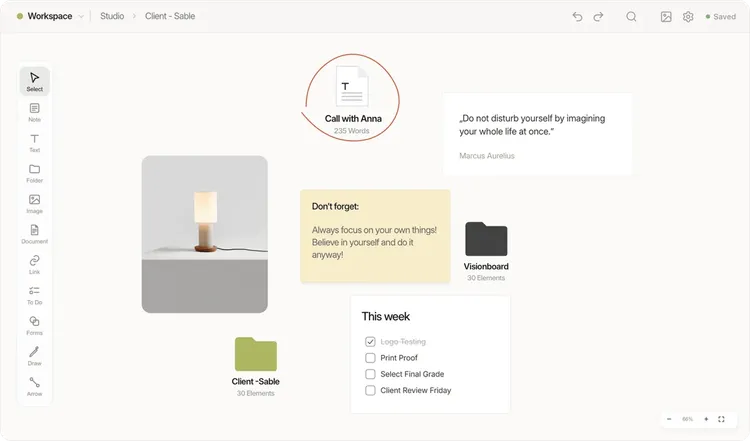
visualOS is a local-first visual workspace for arranging notes and files on boards. Its approach is closer to a personal desktop workspace than a cloud-based collaboration service: boards can be represented by folders and Markdown documents, with images stored as regular files.
That file-based structure may appeal to people who want to keep control of their creative research rather than rely on an online account. Nested boards help organize larger projects, and offline access is part of the appeal. It's a more specialized option than Miro or Notion, with a smaller collaboration feature set.
visualOS vs Milanote: visualOS is aimed at individual visual planning with locally stored content. Milanote makes it easier to share boards and collaborate with a team. Before switching, check how your existing Milanote exports can be represented in visualOS; there isn't a guaranteed one-click migration of editable boards.
Pricing: The browser app is free, while native apps are offered as one-time purchases. Check current pricing and platform availability.
10. xTiles
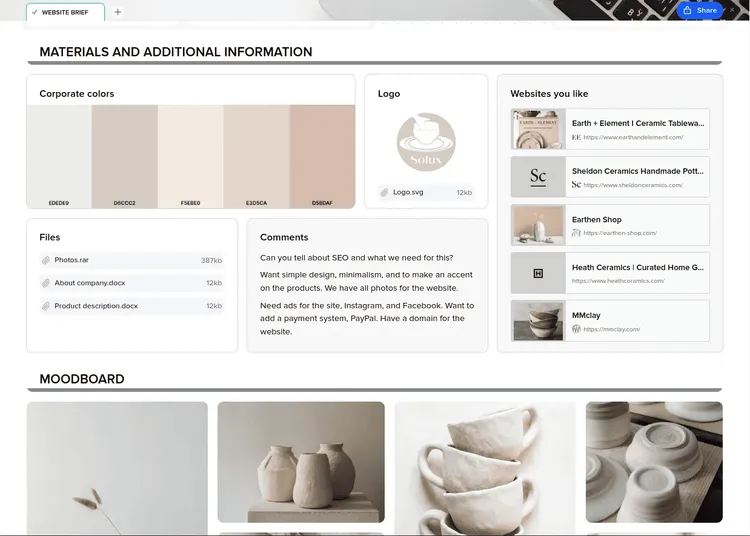
xTiles is a visual workspace built around movable tiles. A tile can contain text, lists, images, videos, and other media, and tiles can be resized and rearranged on a page. That makes the basic interaction closer to Milanote than most document-first tools on this list.
xTiles adds more structure around the visual workspace. Projects can include collections with Gallery, Board, Table, and Calendar views, and cards can have properties for filtering and organization. It also includes tasks, reminders, templates, real-time collaboration, comments, and public or private sharing.
xTiles vs Milanote: xTiles is one of the closest alternatives if you like arranging information visually but want more structured planning around it. Milanote remains more focused on moodboards and creative project boards, while xTiles extends the tile-based approach into tasks, collections, calendars, and project organization.
Pricing: xTiles has a free plan with unlimited pages and projects, three personal spaces, and file uploads up to 5 MB. Plus costs $12.42 per user per month with annual billing.
11. Heptabase
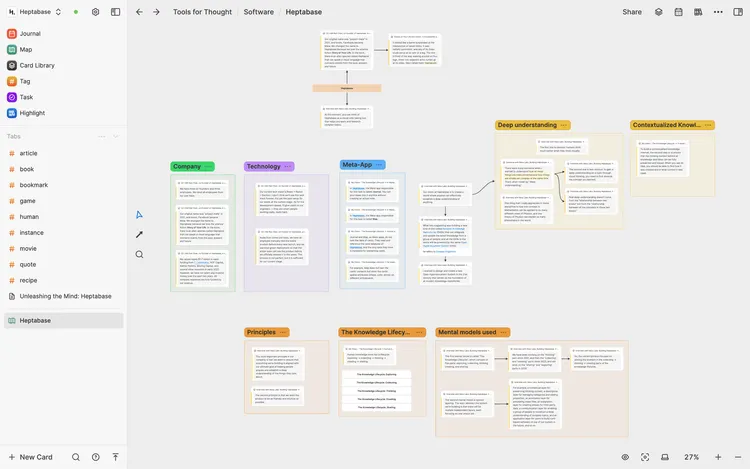
Heptabase is a visual knowledge base built around cards and whiteboards. It is aimed primarily at students, researchers, and people working through complex material rather than teams building moodboards.
Cards can hold notes and source material, then be arranged spatially on whiteboards and connected through bidirectional links. Heptabase also includes PDF annotation, a web clipper, daily journals, Readwise and Zotero integrations, and offline access. That makes it useful when a Milanote board is serving as a research space rather than a design moodboard.
Heptabase vs Milanote: Heptabase is the better fit for research, learning, and connected notes. Milanote makes it easier to collect visual inspiration and plan creative projects with images, tasks, and nested boards. Heptabase puts more attention on building relationships between sources and notes over time.
Pricing: Heptabase does not offer a regular free plan for individual use, but new users can start with a 7-day trial. The standard Pro plan costs $8.99 per month with annual billing or $11.99 monthly.
Which Milanote alternative should you choose?
Start with the part of Milanote you want to replace. A tool that is excellent for moodboards can be a poor fit for project documentation, and a full whiteboard suite can be excessive if you only need a place for reference images.
| If you mainly need... | Choose | Why |
|---|---|---|
| Visual planning plus organized team documentation | Nuclino | Combines an infinite canvas with linked items, collections, and project views |
| Large collaborative whiteboards and workshops | Miro | More facilitation, presentation, voting, and whiteboarding tools |
| Brainstorming alongside Figma design work | FigJam | Fits directly into the Figma workflow and has a low-cost collaboration seat |
| Offline notes and connected visual thinking | Obsidian | Stores Markdown files locally and includes Canvas for spatial notes |
| A dedicated board for art and design references | PureRef | Keeps large image reference boards available beside your creative apps |
| Quick sketches, diagrams, and rough storyboards | Excalidraw | Free, open source, and fast to open without a larger workspace |
| Structured creative projects with databases | Notion | Better for categorizing, filtering, and tracking large sets of project information |
| Finding and saving inspiration from the web | Discovery and recommendations are the main attraction | |
| A local-first freeform canvas with files you control | visualOS | Works offline and stores boards as regular local files |
| A visual workspace that feels closer to Milanote | xTiles | Uses movable tiles but adds collections, tasks, and structured project views |
| Research, learning, and connected visual notes | Heptabase | Combines whiteboards with linked cards, PDFs, highlights, and research tools |
If the freeform visual layout itself is what you want to keep, xTiles is the closest starting point here, while Miro and FigJam put more attention on collaborative whiteboarding. If the bigger problem is organizing a growing project, Nuclino or Notion make more sense. Heptabase and Obsidian fit research and connected notes, while PureRef and Pinterest are narrower choices for visual references.
How to move your boards from Milanote
Milanote lets you export boards as PDF, PNG, Word, Markdown, or plain text, and download images and files in a ZIP archive. The export format you choose depends on what you want to keep.
-
Start with one board. Choose a project with images, notes, links, and tasks so you can see what transfers.
-
Export your content. Follow Milanote's export instructions and save a visual copy alongside the files you need.
-
Check the destination app's import options. A PDF or PNG preserves the layout as a reference, but it won't automatically recreate editable cards in another app.
-
Rebuild and verify. Check that important attachments, source links, and notes remain accessible before moving the rest of your work.
How we selected these Milanote alternatives
We included a tool only if it can replace at least one common Milanote workflow: moodboarding, visual brainstorming, collecting references, organizing creative notes, visual research, or planning a creative project. That is why the list includes different types of products rather than a collection of generic project-management apps.
What we compared
-
Visual flexibility: Can you arrange images, notes, links, and other material spatially, or are you limited to a fixed document or database layout?
-
Organization at scale: How does the app handle a project once it grows beyond one board? We looked at nested boards, folders, linked notes, search, databases, tags, and other structure where available.
-
Collaboration and sharing: We checked real-time editing, comments, guest access, workshop features, and how easy it is to share work with clients or teammates.
-
Offline access and file ownership: Some people specifically leave Milanote because they want local files or dependable offline work, so this is treated as a separate criterion.
-
Free-plan and paid limits: We checked current free tiers, content or board limits, and entry-level paid pricing rather than simply marking a product as "free" or "paid."
Frequently asked questions
What's the best free Milanote alternative?
For collaborative whiteboarding, Miro and FigJam have free plans with board or file limits. Nuclino has a free plan for teams that want visual work alongside organized notes. Excalidraw is a free open-source canvas, while Obsidian is free for personal and work use and stores notes locally.
What's the closest alternative to Milanote?
There is no exact replacement, but xTiles is one of the closest options here because it also uses movable visual tiles for notes, images, and other content. Miro and FigJam are better matches for collaborative whiteboarding, while PureRef is closer when Milanote is mainly serving as an image reference board.
What's the best Milanote alternative for moodboards?
PureRef is a focused choice for artists arranging reference images. Pinterest is better for discovering and collecting inspiration, while Miro and FigJam suit collaborative moodboards. Nuclino works when the moodboard needs to sit alongside project notes and documentation.
Is there a free Milanote alternative without the 100-item limit?
Yes. xTiles has a free plan with unlimited pages and projects, while Obsidian stores notes and Canvas files locally without Milanote's 100-card free-plan cap. Excalidraw is a free open-source canvas, and the browser version of visualOS is free without a note limit. Miro and FigJam also have free plans, but they use different board or file limits.
Is there an offline Milanote alternative?
Obsidian stores Markdown notes locally and includes a visual Canvas. PureRef is a desktop reference-board app, and visualOS is built around local files and offline access. These are better starting points if working without an internet connection is a requirement.
What's the best Milanote alternative for writers?
Obsidian fits writers who want linked research, local Markdown files, and offline access. Nuclino is more suitable when several people are collaborating on outlines, drafts, research notes, and visual planning in the same workspace.
What's the best Milanote alternative for research?
Heptabase is the most research-focused option on this list. Its whiteboards connect notes, PDFs, highlights, and sources, while Obsidian is a better fit if you prefer local Markdown files and a plugin-based setup. Nuclino works better when research needs to be shared and developed with a team.
What's the best open-source Milanote alternative?
Excalidraw is the open-source option on this list. It is built for freeform sketches, diagrams, and visual thinking. Obsidian also has a local Canvas feature, but Obsidian itself is not open source.
