
Teams accumulate a lot of knowledge in places that are hard to search later: chat threads, documents, meeting notes, project tools, and archived emails. A team wiki gives that information a shared home where people can find it again and keep it up to date.
A good team wiki does more than store documents. It should make it easy to find answers, connect related information, and contribute new knowledge without creating another complicated system to maintain.
This guide covers what belongs in a team wiki, what to look for in team wiki software, and how to set one up so people actually use it.
What is a team wiki?
A team wiki is a shared space where people document and organize the knowledge they need for their work. It can contain processes, policies, onboarding material, project knowledge, meeting notes, and other information that would otherwise be scattered across documents, chat, and email.
What makes it a wiki is the way that information is connected. Related items can link to each other, making it easier to move between topics and find context without relying on a rigid folder structure.
A team wiki is closely related to an internal wiki or internal knowledge base. The exact terminology varies, but the goal is broadly the same: give the team one place to find and maintain shared knowledge.
Here is an example of a team wiki in Nuclino:
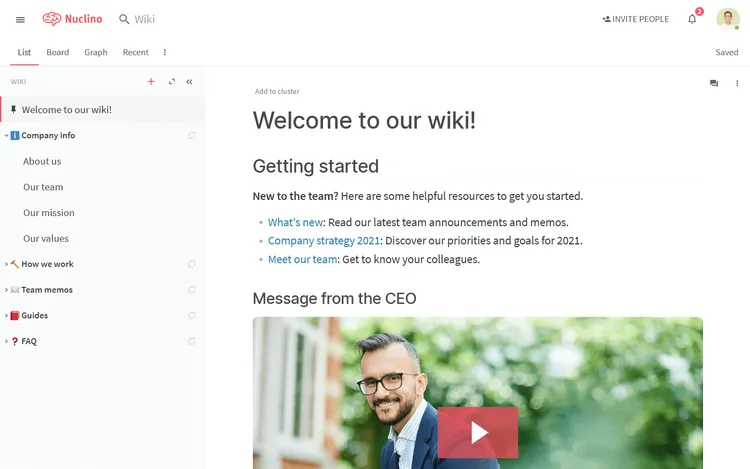
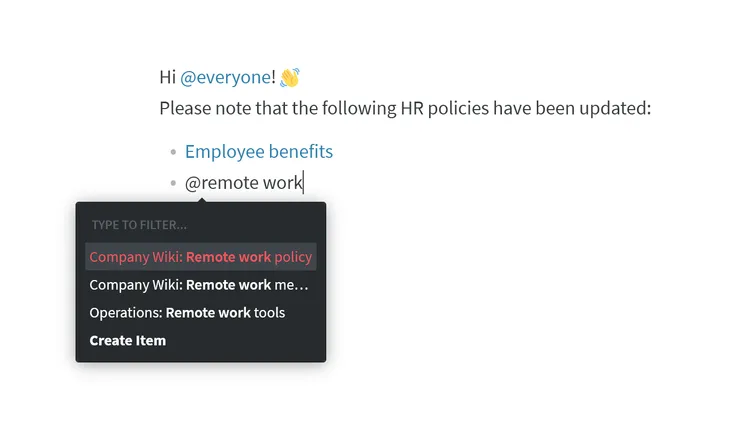
In Nuclino, you can connect related information by typing "@" and selecting another item.
Why use a team wiki?
Information tends to become harder to find as a team grows. A process may be explained in a chat thread, another version may live in a document, and someone else may have written their own notes about it.
A team wiki gives people a known place to look first.
Some of the main benefits include:
- Faster access to information: People can search the wiki before asking a colleague or digging through old messages.
- Easier onboarding: New employees can find company information, processes, and team documentation in one place. A well-maintained wiki can become an important part of the employee onboarding process.
- Fewer repeated mistakes: Decisions, lessons learned, and established processes remain available after a project is finished.
- Less knowledge loss: Important information does not disappear when someone changes roles or leaves the company.
- Fewer repeated explanations: Answers to common questions can be documented once and updated when something changes.
A wiki only helps if people trust the information in it. The content needs to stay easy to find, easy to edit, and reasonably current.
What should a team wiki include?
There is no fixed list of items every team needs. The best starting point is the information people already look for, ask about, or explain repeatedly.
Common areas include:
- Company information: Mission, values, organizational structure, important contacts, and company-wide guidelines
- Policies: HR policies, expenses, time off, security rules, remote work policies, and other internal guidelines
- Processes: Recurring workflows, checklists, standard operating procedures, and instructions
- Onboarding: New hire guides, account setup, team introductions, and onboarding checklists
- Team documentation: Responsibilities, recurring workflows, reference material, and team-specific guides
- Projects and decisions: Project background, specifications, research, important decisions, and useful meeting notes
You do not need to document everything before launching the wiki. Start with information people already need and add more as gaps become obvious.
A smaller wiki with useful, current information is easier to navigate than a large collection of items created simply to fill out the structure.
What to look for in team wiki software
The software affects how easy the wiki is to use and maintain. A tool that takes too much effort to navigate or edit can quickly turn documentation into a chore.
Before choosing wiki software, check a few areas:
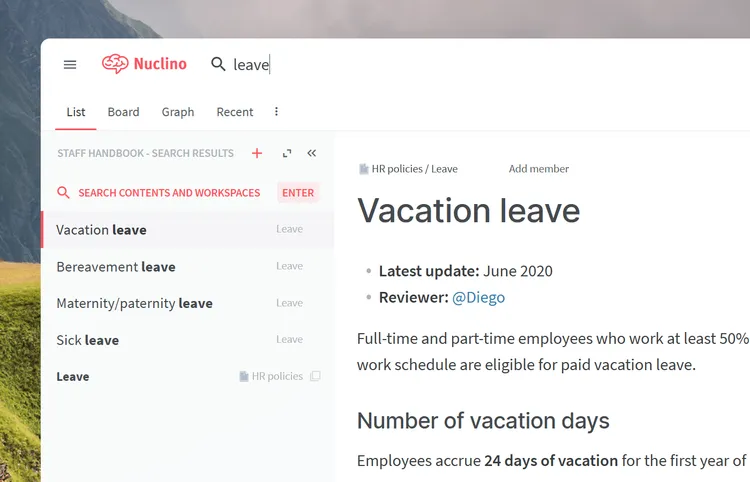
- Search: People should be able to find information quickly, even when they do not know where an item is stored.
- Editing: Creating and updating content should be easy for non-technical contributors.
- Organization: Look at the available hierarchy, collections, categories, and other ways to group related content.
- Internal links: Linking one item to another should be quick and easy.
- Permissions: You may need to restrict sensitive information or give different teams access to different areas.
- Version history: Previous versions can be useful when important content is changed or deleted.
- Collaboration: Real-time editing, comments, and mentions can make it easier to maintain documentation together.
- Integrations: Connections to chat, project management, file storage, and other tools can reduce duplicated work.
- Maintenance: Look for ways to identify owners, review important content, and spot information that may be outdated.
Our wiki software comparison covers a broader range of hosted and self-hosted options.
Nuclino, for example, combines docs, wikis, projects, and collaborative whiteboards in one workspace. Team members can edit together in real time, search across their content, leave comments, and link related items.
Nuclino can also be used for project management, document collaboration, onboarding, meeting notes, and other work that often sits next to a team wiki.
How to set up a team wiki
Once you have chosen the software, focus on getting a useful first version in front of the team. You can expand the structure once people start using it.
Step 1: Start with information people already need
Make a short list of the questions, documents, and processes people regularly look for.
You might begin with onboarding information, company policies, recurring procedures, team responsibilities, and documentation for important tools or systems.
If information already exists elsewhere, you do not have to rewrite it all. Many wiki tools let you import existing documents. Nuclino, for example, supports content imports from several common formats and tools.
Step 2: Give the wiki a simple structure
Group related information into a few broad areas that people will recognize. The categories you use will depend on your team, but the structure should make it obvious where someone would look for a policy, process, project, or piece of team documentation.
Keep the hierarchy fairly shallow at first. Several layers of categories can make a small wiki harder to navigate, and you can always add more structure as the content grows.
If a topic could reasonably belong in more than one place, choose one main location and use internal links to connect it to related information elsewhere in the wiki.

Step 3: Set access and ownership
Some information should be available to everyone. Other content may need tighter access.
Think about sensitive areas such as HR documents, performance information, financial material, or administrative settings. Use roles and permissions to keep those areas limited to the people who need them.
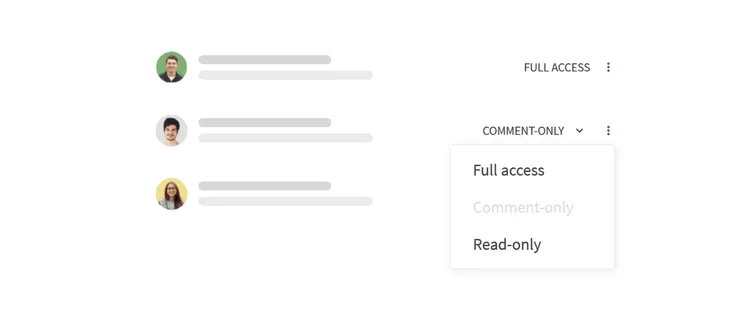
It also helps to know who is responsible for important content. A page does not need a formal owner in every case, but policies, procedures, and other critical information should have someone who knows when an update is needed.
In Nuclino, roles and permissions can be configured at the workspace level.
Step 4: Make the wiki part of everyday work
The wiki becomes useful when people know to look there and contribute when something changes.
Introduce it during onboarding. Link to wiki items in chat when someone asks a documented question. Add new information when a recurring question appears. Update existing items when a process changes.
Comments and mentions can also help people flag missing or outdated information without editing the item themselves.
Most teams will not get the structure exactly right on the first attempt. Watch how people use the wiki and adjust it when certain information remains hard to find.
For a broader walkthrough that also covers public, personal, and self-hosted wikis, see our guide on how to create a wiki.
Create a Nuclino account to set up a team wiki and start adding your existing documentation.
