Looking for a Microsoft Project alternative? You've come to the right place.
Microsoft Project is one of the oldest project management tools and for a long time it was the default choice for formal project planning. But many teams now struggle with its learning curve, limited collaboration, high cost, and slow pace of change.
Some people want a simpler tool. Others want better collaboration. And more and more teams are now looking to move away from the Microsoft ecosystem entirely.
This guide compares the best Microsoft Project alternatives. Each tool fits a different type of team, and the right choice depends on how you actually manage projects day to day.
Quick picks: best Microsoft Project alternatives in 2026
To put this list together, we reviewed dozens of project management tools and focused on products that teams actually use as Microsoft Project replacements.
Here's a quick overview:
- Nuclino: Best simple and modern alternative
- Microsoft Planner: Best within the Microsoft ecosystem
- Trello: Best for visual Kanban workflows
- Jira: Best for software teams using Agile
- Zoho Projects: Best budget-friendly option
- Basecamp: Best for structured team work
- Asana: Best for task-focused teams
- Wrike: Best for Gantt-first planning
Microsoft Project Online is retiring in 2026
Microsoft has announced that Project Online will officially retire on September 30, 2026. After that date, the service will no longer be available. This change affects Project Online only. It does not affect Project Desktop or Project Server.
If you currently use Project Online, this means you will need to move your data and workflows to a different solution before the retirement date. Microsoft recommends switching to Planner, Project Server Subscription Edition, or Dynamics 365 Project Operations.
For many teams, this is a good moment to step back and rethink their setup. Instead of moving to another Microsoft tool, many teams choose to switch to a simpler, cloud-based alternative that offers better collaboration, faster onboarding, and lower long-term cost.
If you rely on Project Online today, you should start evaluating alternatives early. Migrating timelines, tasks, and dependencies takes time, especially for larger teams.
Best Microsoft Project alternatives
To make your decision easier, we've evaluated dozens of options and put together a shortlist of the best Microsoft Project competitors and alternatives.
Each one of these tools has its strengths and weaknesses. Depending on the reason you are unhappy with Microsoft Project, a different alternative may be a better fit for your needs. We hope this list helps you learn more about your options and find the Microsoft Project alternative that works for you — let's take a closer look at your options.
1. Nuclino
- Pricing: Free, advanced features starting from $6/user/month
- Rating on Capterra: 4.7/5
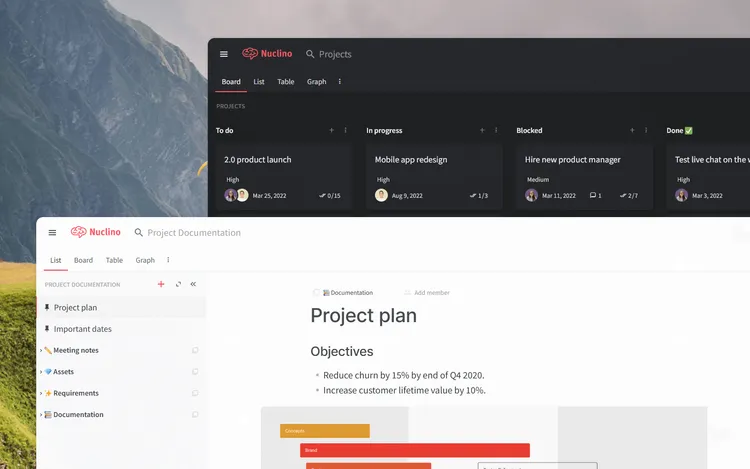
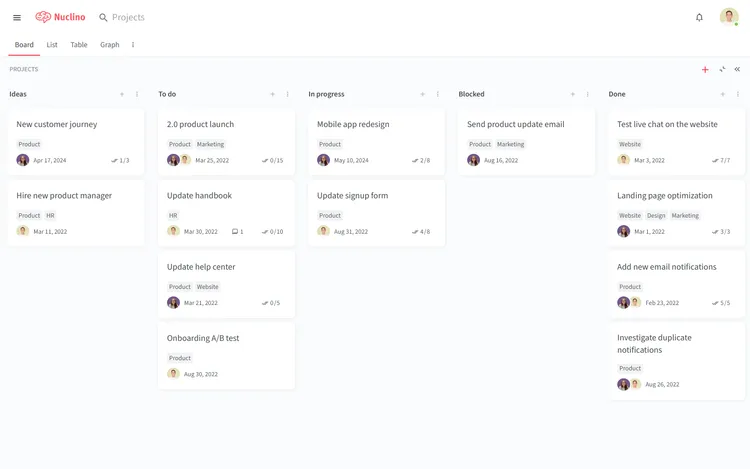
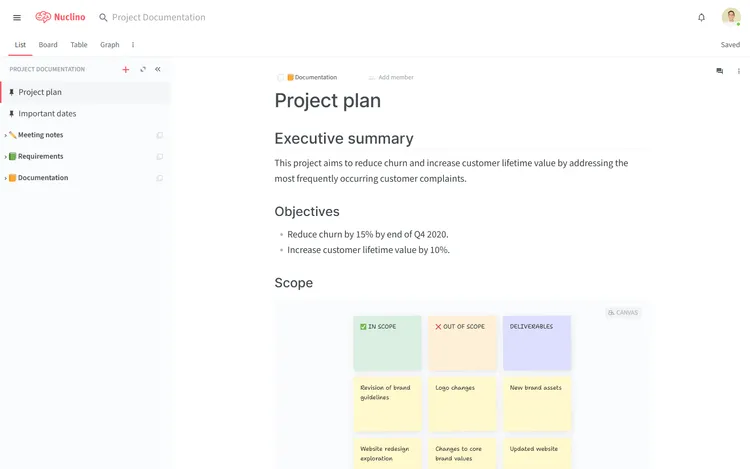
Nuclino is a great alternative for those who find Microsoft Project to be too clunky, bloated, or slow. Its clean and user-friendly interface sets it apart from other project management tools. Nuclino works "out of the box", making it easy for anyone to get started with virtually no learning curve.
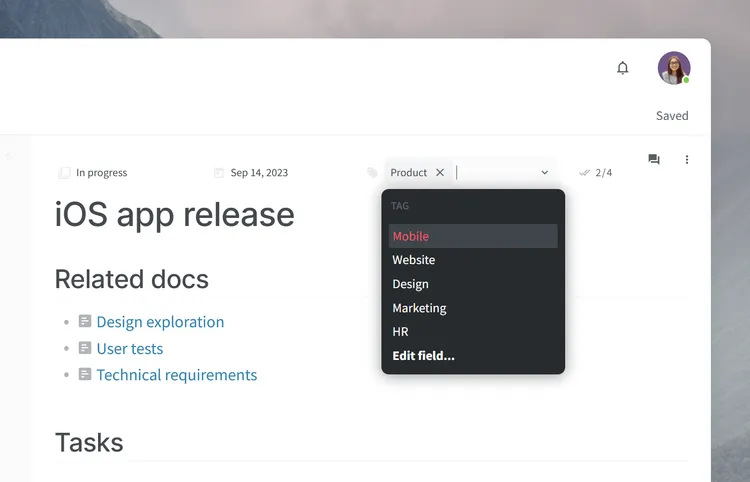
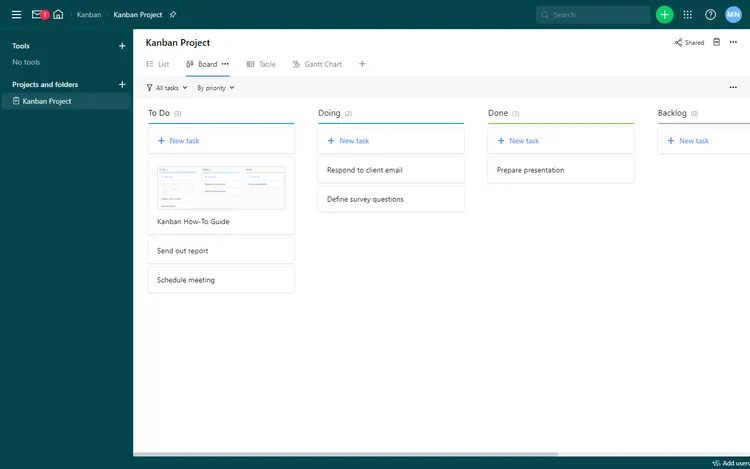
Despite its simplicity, Nuclino doesn't sacrifice functionality. It offers various ways to organize your projects, including Kanban boards, nested lists, tables, and mindmap-style graphs. You can also add custom fields to track project details like due dates, assignees, and priorities.
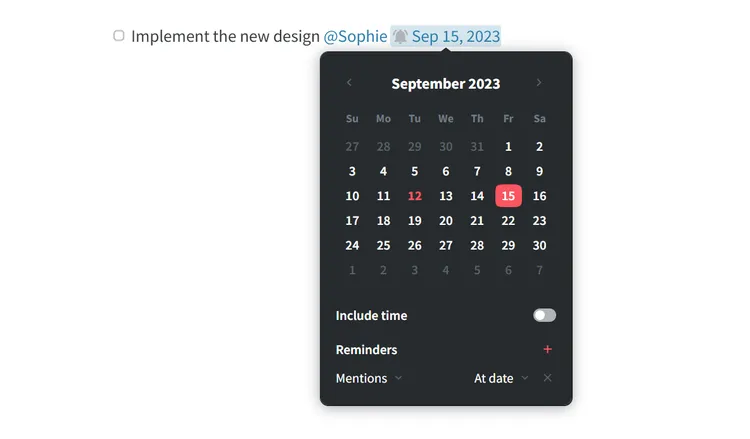
A fundamental strength of Nuclino lies in how it brings together structured data and long-form content. Every card on your board is its own document where you can collaborate in real time, documenting project goals, adding sub-tasks, embedding files, and preserving the context of every decision. You can also exchange asynchronous feedback directly in Nuclino using comments and mentions. It's essentially a project management app and a document collaboration tool in one.
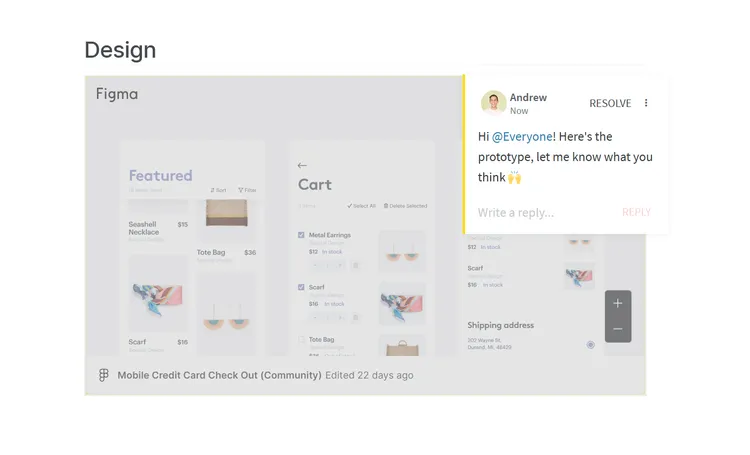
At its core, Nuclino is a highly versatile tool. While it can be used exclusively as an alternative to Microsoft Project, it can replace many other collaboration tools. Beyond project management, it can serve as your company wiki, internal knowledge base, note-taking tool, and more, bringing all your team's knowledge, docs, and projects together in one place.
What users say about Nuclino:
"The way Nuclino is built makes the platform very flexible towards the way you work. I use Nuclino to document the projects I work on. It serves as a wiki for the project which helps anyone joining the project at later stages understand what was done during the design process, and why certain decisions were made."
2. Microsoft Planner
- Pricing: Starting from $10/user/month
- Rating on Capterra: 4.3/5
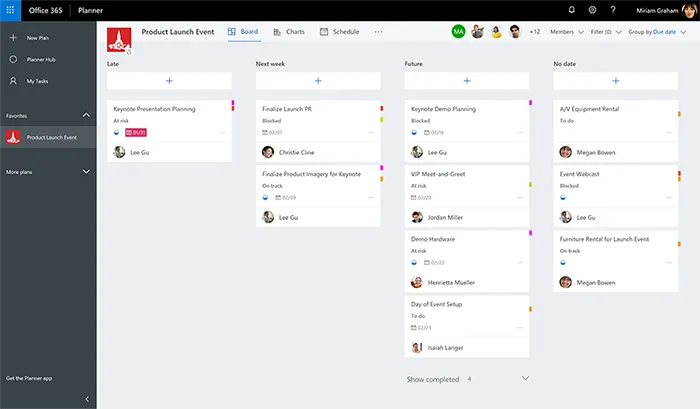
Planner is a relatively new app in the Microsoft ecosystem. It was created to offer a simplified project and task management solution compared to the more complex and feature-rich Microsoft Project. Planner aims to provide a user-friendly, collaborative, and visually intuitive platform for teams and individuals to manage tasks and projects.
Planner is included in most Microsoft 365 subscriptions, making it a cost-effective choice for organizations already using Microsoft's productivity suite. Microsoft Project typically requires a separate licensing fee, which can be more expensive.
Like Microsoft Project, Planner seamlessly integrates with other Microsoft 365 applications, such as Teams and SharePoint.
Looking for more tools similar to Microsoft Planner? Check out this list of best Microsoft Planner alternatives.
What users say about Microsoft Planner:
"It is a task and project management app that can give you a kanban view of your tasks. You can easily add people from your organization and assign jobs. The only thing I hate about this app is it doesn't have separate UIs for Gantt and a timeline view. Microsoft has a different app for that called Microsoft Projects. Which I believe should merge with it."
3. Trello
- Pricing: Free, advanced features starting from $10/user/month
- Rating on Capterra: 4.5/5
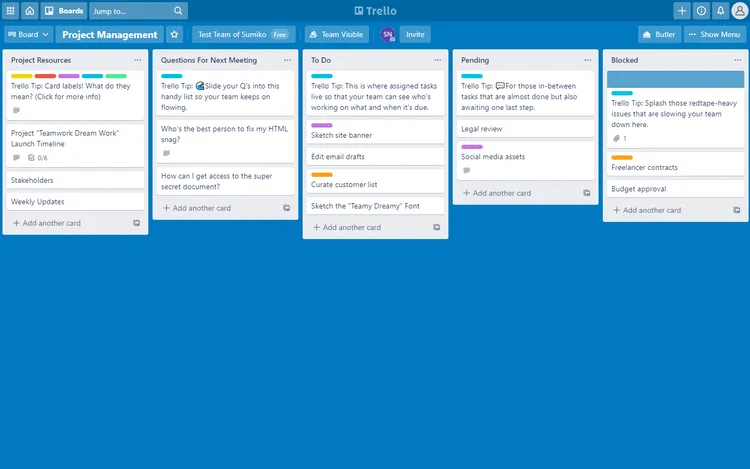
If you find Microsoft Project to be too clunky or over-engineered for your needs, Trello can be a great alternative. In contrast to Microsoft Project, Trello takes a more visual and user-friendly approach to project management. Trello doesn't overwhelm you with complex features. It's designed to be intuitive from the get-go, requiring minimal training.
Trello also offers more robust collaboration features than Microsoft Project. Team members can comment on cards, attach files, and assign tasks, facilitating real-time teamwork. Its integrations with other apps and services offer customization possibilities.
In terms of cost, Trello offers a free version with basic features, which can be attractive for smaller teams on a budget.
Looking for more tools similar to Trello? Check out this list of Trello alternatives.
What users say about Trello:
"The MS Project program was outdated and we could not afford to buy the latest version. Plus, training other team members on how to use MS Project was lengthy and would involve too much time investment. Trello Boards are good for planning - as good as MS Project. The user interface is simple for most people. Even our most computer-challenged people are able to use this product."
4. Jira
- Pricing: Free, advanced features starting from $6/user/month
- Rating on Capterra: 4.4/5
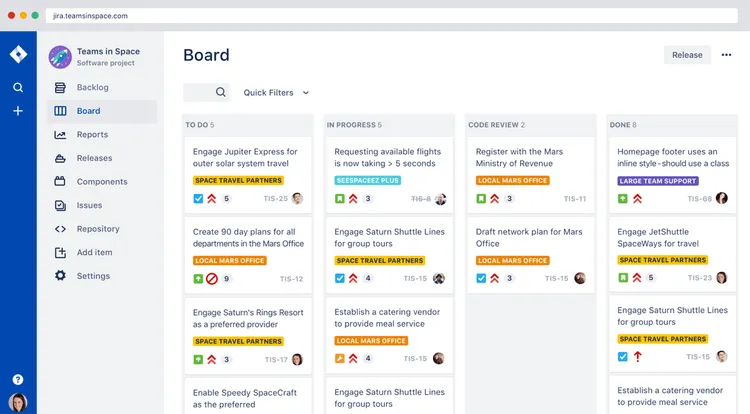
Jira is a versatile project management and issue tracking software developed by Atlassian. It's a Microsoft Project alternative that is particularly popular among software development teams. Unlike MS Project, Jira is more focused on Agile project management methodologies like Scrum and Kanban. It provides tools for sprint planning, backlog management, and Agile reporting.
While Microsoft Project primarily relies on Gantt charts to display project timelines and dependencies, Jira is known for its Kanban boards. It's highly customizable, allowing teams to adapt it to their specific workflow and project requirements. Custom fields, workflows, and permissions can be configured to match your needs.
Jira integrates seamlessly with a wide range of development and collaboration tools, including Confluence (for documentation), Bitbucket (for version control), and many third-party apps through its marketplace.
Looking for more tools similar to Jira? Check out this list of Jira alternatives.
What users say about Jira:
"MS Project was very heavy to use. Did not provide easy interface for running a whole portfolio. The Gantt chart was good but wasn't user-friendly to print out or manage and make decisions based on it for the whole portfolio. The cost of MS Project for all users was also very expensive. Jira provided better reporting and performance. It was also a bit cheaper. Plus, Jira being an Atlassian product, it fit well into our ecosystem."
5. Zoho Projects
- Pricing: Free, advanced features starting from $4/user/month
- Rating on Capterra: 4.5/5
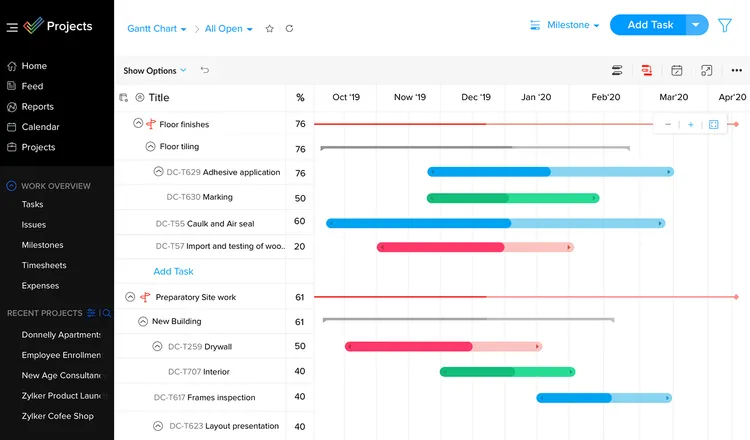
Zoho Projects is a cost-effective alternative to Microsoft Project, particularly suited for small to medium-sized teams and organizations looking for a straightforward and accessible project management tool.
Like Microsoft Project, Zoho Projects allows users to create Gantt charts to visualize project timelines. Team members can collaborate on tasks, share comments, and attach files. It also offers task automation features to streamline workflows. It includes time-tracking features to monitor how much time is spent on specific tasks and projects.
What users say about Zoho Projects:
"This is hands down the best project management software for small companies that don't want or need the heavy lifting of software such as Microsoft Project but need some form of project management over simple whiteboards. Transitioning from the office whiteboards to Zoho Projects is easy. It is easy enough to deploy even to the least tech-literate in the project team - all they have to do is see the tasks assigned to them and tick off things. The chat feature is a bonus."
6. Basecamp
- Pricing: $15/user/month or $299/month for unlimited users
- Rating on Capterra: 4.3/5
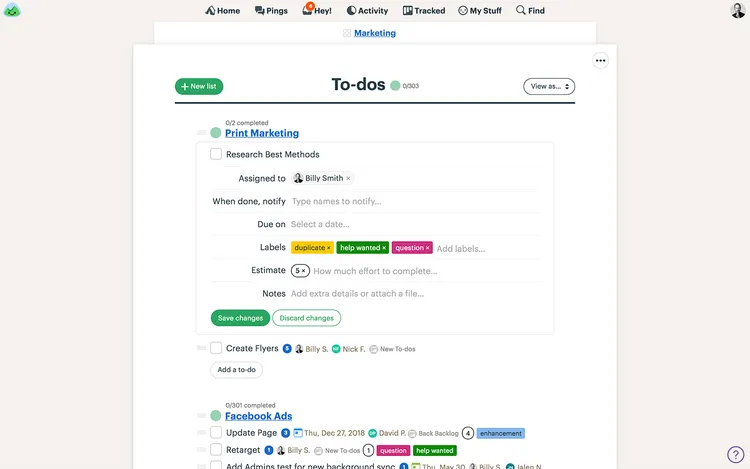
Basecamp is a Microsoft Project alternative known for its simplicity and user-friendly design. Unlike Microsoft Project, which is feature-rich and can handle complex project scheduling, Basecamp takes a more streamlined and intuitive approach to project management.
Key features of Basecamp include task lists, file sharing, message boards, and a centralized project dashboard. Users can easily create to-do lists, assign tasks, and share documents within a project workspace.
Looking for more tools similar to Basecamp? Check out this list of alternatives to Basecamp.
What users say about Basecamp:
"For my purposes, Basecamp provided more capability and was simple and intuitive for basic project management. Basecamp is incredibly intuitive and easy to use. New users can start using the system in a very short period of time. I love the ability to upload files to specific projects or teams, and to organize them into folders and update them with new versions. I also really appreciate how Basecamp makes sharing news, messages, and schedules with members of the team. Basecamp is also very affordable, even for small teams."
7. Asana
- Pricing: Free, advanced features starting from $10.99/user/month
- Rating on Capterra: 4.5/5
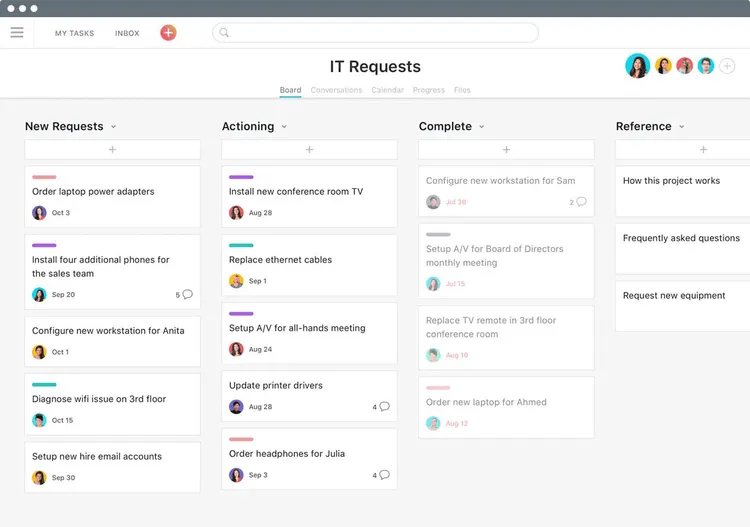
Asana is an alternative to Microsoft Project known for its simplicity and ease of use. Unlike Microsoft Project, which is more traditional and geared towards complex project planning, Asana focuses on team collaboration and task management.
Users create tasks, assign them to team members, set due dates, and add details. Team members can comment on tasks, share files, and communicate within the platform. While Microsoft Project is known for Gantt charts and detailed project timelines, Asana offers more basic timeline views. It's less about intricate project planning and more about tracking progress and deadlines.
Learn more about how Microsoft Project compares to Asana: Microsoft Project vs Asana.
Looking for more tools similar to Asana? Check out this list of Asana alternatives.
What users say about Asana:
"We wanted to move from Microsoft Project to Agile project management. Asana has been great for keeping our team on track! We've seen a big increase in efficiency and delivery as we started to use it! One great thing about the tool is the integration with other software, including email reminders and the possibility to set tasks from Slack. Integration between project timeline and Kanban boards is also easy, as is integrating small tasks into the larger project plan."
8. Wrike
- Pricing: Free, advanced features starting from $10/user/month
- Rating on Capterra: 4.4/5
If you prefer a Gantt chart-centric approach to project management, Wrike can be a great Microsoft Project alternative. Wrike offers robust Gantt chart capabilities and makes it easy for users to create and modify project timelines. The Gantt chart in Wrike offers interactive features, allowing you to drag and drop tasks, adjust dependencies, and visualize project progress.
Beyond Gantt charts, Wrike offers task management features like assigning tasks, setting due dates, and tracking progress, providing a well-rounded project management experience. It also provides reporting and analytics features that help you monitor project performance and make data-driven decisions.
Looking for more tools similar to Wrike? Check out this list of Wrike alternatives.
What users say about Wrike:
"Microsoft Project while robust was too much software for a small team with too much setup. It does have the necessary reporting however, Wrike was more approachable and usable for our use case. Task and project management is great on Wrike, however, communication is bare bones. The issue we had was that we used Wrike, but still had to use Teams for communication and collaboration."
How we picked these Microsoft Project alternatives
We evaluated these tools based on real-world usage, public user reviews, feature coverage, and how well they replace common Microsoft Project workflows.
We focused on:
- Timeline and dependency management
- Team collaboration and real-time editing
- Ease of onboarding
- Flexibility for different team sizes
- Value for money
Find the best Microsoft Project alternative for you
Microsoft Project still works well for detailed scheduling and traditional project planning. For many teams, it feels heavy, slow, and difficult to collaborate in.
So what is the best alternative to Microsoft Project? The short answer is "it depends".
If you are looking for a simpler, faster, and more intuitive solution, Nuclino can be a great option. Trello is a good alternative for those looking for a no-bells-and-whistles Kanban tool. Jira is best suited for software development teams interested in replacing Microsoft Project as their Agile project management system. If you are a small team working with a limited budget, consider Zoho Projects as an affordable alternative. The flat pricing model of Basecamp makes it another attractive alternative to Microsoft Project. Asana, on the other hand, stands out thanks to its modern, sleek interface.
Shortlist two or three options, try them with a real project, and involve your team in the decision.
Microsoft Project FAQs
Is Microsoft Project being discontinued?
No. Microsoft Project Desktop and Project Server will continue to exist. However, Microsoft has announced that Project Online will retire on September 30, 2026.
If you use Project Online today, you will need to migrate to another solution before that date. Microsoft suggests Planner, Project Server Subscription Edition, or Dynamics 365 Project Operations. Many teams use this moment to switch to non-Microsoft alternatives.
What is the best replacement for Microsoft Project?
There is no single best option for everyone. Teams that want something simpler often choose Nuclino or Trello. Teams that rely on Agile workflows usually prefer Jira. If you want to stay inside the Microsoft ecosystem, Planner is the closest lightweight option.
Can I import Microsoft Project files into other tools?
Some tools support importing .mpp or CSV files. Wrike, Smartsheet, and several Gantt-focused tools offer this. Lightweight tools often require manual migration.
Why do people move away from Microsoft Project?
While Microsoft Project is a widely used platform, it's not without its limitations and many teams teams cite the same issues:
- Some users find the interface of Microsoft Project dated.
- MS Project isn't the most intuitive or user-friendly tool and new users may struggle to get the hang of it.
- The collaboration features offered by Microsoft Project are very limited.
- Microsoft Project is not optimized for modern project management workflows and methodologies, such as Agile.
- Microsoft Project is quite expensive compared to most other project management tools.
- Microsoft Project doesn't offer a mobile app.
Does that sound familiar? Then it might be time to switch to a more user-friendly and fast option – fortunately, there are many great Microsoft Project alternatives to choose from.